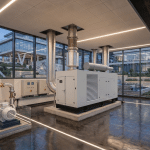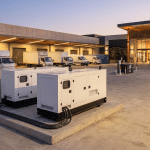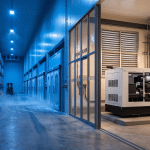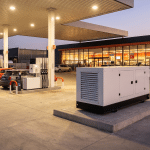
Supervising the electrical infrastructure and diesel generators in shopping malls & retail precincts is a continuous exercise in structural equilibrium. Unlike a manufacturing plant or specialised industrial facility where heavy motors are spun up on a highly predictable, centralised operational schedule, a retail centre is fundamentally volatile.
On any given afternoon, hundreds of independent tenants, ranging from fashion boutiques operating low-voltage LED arrays to large anchor grocery stores running massive commercial HVAC systems and open-surface food court kitchens cycle their equipment on and off entirely at random.
When connected to the primary municipal grid, the sheer volume of the incoming utility network acts as a buffer against these fluctuating localised demands. However, when primary power drops out and the facility switches over to its independent onsite generation plant, this chaotic switching patterns introduces an extreme operational hazard: Severe Phase Imbalance.
1. The Electrical Physics of Phase Distortion
An industrial generator utilises a three-phase alternator configuration. It splits its total capacity across three independent copper winding paths, labeled Phase L1, Phase L2, and Phase L3. In an ideal engineering environment, the electrical load pulled from each phase should be perfectly identical. In large-scale retail architectures, this ideal state is an impossibility.
Consider a standard Saturday lunch peak: the food court experiences maximum demand, drawing massive single-phase currents for electric deep fryers, grills, and commercial extraction fans on Phase L1. Simultaneously, the clothing retail wings on Phase L2 and L3 are drawing a significantly lower baseline. This delta creates an uneven magnetic force within the alternator.
                [SHOPPING MALL POWER BUSBAR ON STANDBY GENERATOR]
                                       |
          +----------------------------+----------------------------+
          |                            |                            |
      [Phase L1]                   [Phase L2]                   [Phase L3]
     (Food Court)                (Anchor Supermarket)          (Fashion Wing)
   Current Draw: 85%            Current Draw: 45%            Current Draw: 20%
          |                            |                            |
          +----------------------------+----------------------------+
                                       |
                   [CRITICAL PHASE IMBALANCE: 65% VARIANCE]
                                       |
          +----------------------------+----------------------------+
          |                                                         |
[Standard Low-Cost Alternator]                           [Generator King Spec]
- High Neutral Current Flow                              - 2/3 Pitch Windings Resist Harmonics
- Concentrated Thermal Hotspots                          - Digital AVR Actively Balances Excitation
- Winding Insulation Melts (Catastrophic Short)          - Continuous Stable Operation
When the load difference between any two phases exceeds 20% to 30%, the vector sum of the current no longer cancels out to zero. Instead, a high residual current begins rushing down the alternator’s neutral conductor.
If the standby generator has been sourced using low-cost, generic alternators, this high neutral current creates intense localised thermal hotspots within the stator windings. Over a short period, this intense heat breaks down the protective enamel insulation, culminating in a phase-to-phase short circuit that can instantly melt the alternator core and leave the entire mall completely dark.
2. The Danger of Single-Block Sizing vs. Engine Wet Stacking
To circumvent power failures, many retail property developers make the mistake of deploying a single, massive 1250kVA or 1500kVA generator block. While this massive engine possesses the nominal capacity to survive peak trading periods, it introduces a separate operational vulnerability during low-traffic periods: Wet Stacking.
During early morning maintenance shifts or quiet weekday evenings, a shopping mall’s energy footprint drops significantly. Running a massive 1500kVA engine block at less than 30% of its rated capacity prevents the combustion chambers from reaching optimal operating temperatures.
Diesel fuel cannot burn fully under low thermal conditions. It condenses into a sticky, carbon-heavy sludge that glazes the cylinder walls, leaks through the exhaust joints, and dilutes the engine oil. This degrades the engine’s real-world horsepower output and significantly shortens the lifespan of a multi-million Rand infrastructure investment.
3. The Multi-Engine Synchronisation Framework
At Generator King, we engineer commercial retail power solutions using an advanced Dynamic Paralleling System rather than relying on an unreliable single-block architecture:
-
Thermal-Isolated Alternator Windings: Every SDEC and Baudouin engine we configure for commercial property development is paired with high-spec alternators wound to a precise 2/3 pitch configuration. This mechanical standard reduces the structural impact of voltage harmonics and safely dissipates the high neutral current spikes generated by single-phase retail grouping errors.
-
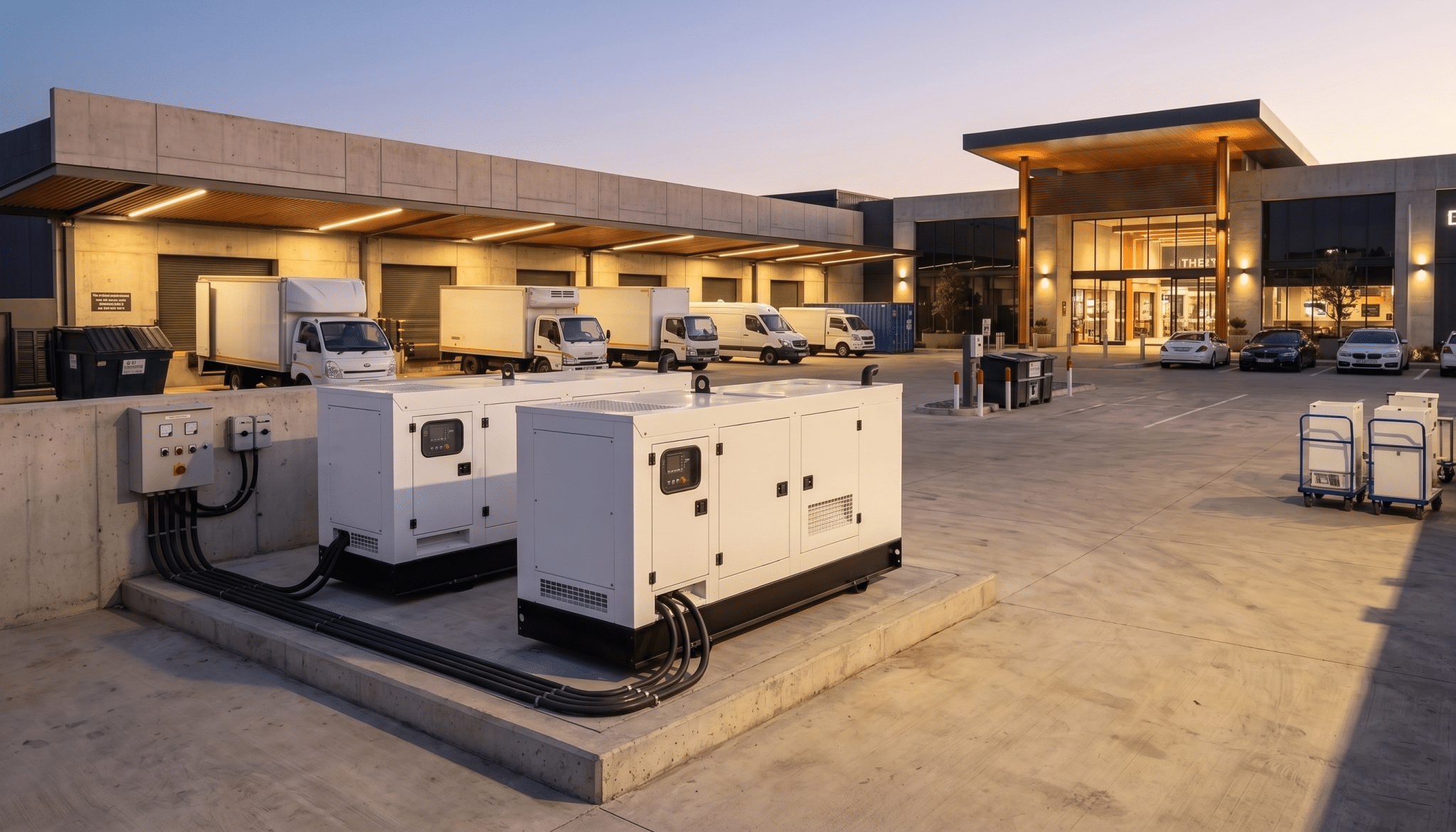
Automated Load-Staged Paralleling: Instead of one oversized engine, we implement multi-unit synchronised banks, such as twin Baudouin 500kVA or 650kVA units linked via digital controllers. When the mall’s demand is minimal, only one engine operates, running at a high, clean thermal threshold that eliminates wet stacking. The microsecond the system detects tenant load scaling up, the digital synchroniser automatically fires the secondary engine, matches the phase angles perfectly, and joins the busbar to split the demand with absolute precision.
Secure Your Commercial Infrastructure
A shopping centre is a sophisticated mechanical ecosystem that requires specialised electrical consideration. Relying on a standard box-drop generator installation leaves your asset vulnerable to terminal alternator degradation and inefficient fuel consumption patterns.
Protect your tenants, preserve your capital machinery, and stabilise your operating margins. Contact the Generator King today to discuss a professional phase-load configuration review, and let our technical team design an integrated multi-genset power plant built for long-term commercial resilience.
By the Generator King Technical Team