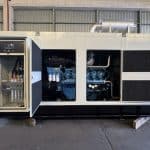
Understanding how your generator operates from the moment the lights flicker to the second the engine shuts down is essential for ensuring the longevity of your machine and the safety of your property. While all diesel generators perform the same ultimate task, the operational cycle varies significantly depending on whether you have a manual or fully automatic system. So let’s dive in to “How Do Backup Generators Work?”
At Generator King, we supply high-performance SDEC, Baudouin, FAW, and Volvo units that can be configured for any operational requirement. Here is exactly how these systems operate during a power failure.
The Three Types of Generator Operation
Before looking at the cycle, it is important to identify which system you are utilising. The “operation” is defined by how the engine starts and how the electrical load is transferred.
1. Manual Start and Manual Changeover
This is the most basic form of operation, common in smaller portable units.
-
Starting: You must physically go to the generator and turn a key or pull a recoil cord.
-
Transfer: You must manually flip a changeover switch on your Distribution Board (DB) to move the house or business from “Mains” to “Generator.”
2. Electric Start (Key Start)
Similar to a car, these units feature an internal battery and a starter motor.
-
Starting: You push a button or turn a key on the control panel.
-
Transfer: Still requires a manual changeover switch on the DB board.
3. Fully Automatic Standby Operation (ATS)
This is the gold standard for backup power South Africa, utilised in all industrial and premium commercial installations.
-
Operation: No human intervention is required. An Automatic Transfer Switch (ATS) manages the entire sequence from start to finish.
The Automatic Operational Sequence
For a standby generator, the operation follows a precise, pre-programmed sequence designed to protect the engine and your electrical equipment.
Step 1: Sensing and The “Nuisance” Delay
When the municipal power fails, the generator does not start instantly. The control panel (typically a SmartGen or similar unit) waits for a pre-set “Delay to Start” (usually 3 to 10 seconds). This prevents the generator from starting during momentary “dips” or brownouts, which are common in South Africa.
Step 2: Cranking and Ignition
Once the delay expires, the controller engages the starter motor. The engine cranks and fires. If the engine fails to fire on the first attempt, the controller will rest and try again, usually up to three times, before triggering a “Fail to Start” alarm.
Step 3: Warm-up and Stabilisation
Once the engine is running, it must reach its rated speed (1,500 RPM for a 50Hz supply). The alternator then begins producing electricity. The controller monitors the voltage and frequency to ensure they are stable and safe before allowing any power to flow to your building.
Step 4: Load Transfer
Once the power is confirmed as “clean,” the ATS physically switches your property’s electrical load from the grid to the generator. You will experience a brief moment of darkness (usually 10 to 30 seconds in total) before the power returns.
Safe Shutdown and the “Cool-down” Cycle
Proper operation is as much about how the generator stops as how it starts.
-
Retransfer: When the ATS detects that the municipal power has returned and stayed stable for a few minutes, it switches your load back to the grid.
-
The Cool-down Period: This is the most misunderstood part of generator operation. After the load is removed, the engine must continue to run for an additional 2 to 5 minutes without any load.
-
Why it matters: Running the engine “unloaded” allows the coolant to circulate and lower the internal temperature of the turbocharger and engine block. Shutting a hot engine down immediately can lead to “cooking” the oil and premature component failure.
Operational Best Practises for South Africans
To ensure your generator operates perfectly every time, follow these operational rules:
-
Never Start Under Load: If you have a manual system, always ensure the changeover switch is in the “OFF” position before starting or stopping the engine. Starting under load strains the starter motor and alternator.
-
Weekly Exercise: Even if there is no loadshedding, run your generator for 10 to 15 minutes once a week. This keeps the battery charged, circulates the oil, and ensures the fuel stays fresh.
-
Monitor the Control Panel: Familiarise yourself with the warning lights. Alarms for “Low Fuel,” “Low Battery,” or “High Temp” are early warning signs that prevent a total failure during an actual outage.
-
Garage Safety: Never operate a generator inside a garage or enclosed space. Even with the door open, the risk of toxic carbon monoxide build-up is fatal.
Conclusion: Trust Professional Operation for Peace of Mind
The goal of a backup system is to remove the stress of power failures. By utilising a fully automatic SDEC, Baudouin or FAW standby system from Generator King, the “operation” becomes something you never have to think about—it simply works when you need it most.
Is your current backup system too difficult to operate? Contact Generator King today to discuss upgrading to an automated ATS solution or to get a quote on a new, easy-to-use diesel generator for sale.
By the Generator King Technical Team